
I’m sceptical by nature. So when I decided to try GroundingWell products, I wanted to find out for myself whether they made a difference. Here’s what happened.
Summary
I tracked my sleep* across a 13-night baseline, followed by 31 nights of testing across 4 locations. One night I didn’t use the products, so I excluded it from the analysis. The results below are from the 30 nights I did…
- Sleep quality score: UP from a baseline of 76 up to 90 by the final period
- Total sleep: UP from under 7 hours a night to consistently over 8
- Deep sleep: UP 63% in minutes compared to my pre-trial baseline
- Aches and pains: Noticeably reduced — though harder to measure precisely than sleep data
The smaller grounding sheet and grounding mat are still in my pack, and are coming traveling with me for the foreseeable future.
That’s the short version.
Below you’ll find the full story — including what I don’t know, what I can’t claim, and what I’d suggest if you’re thinking about trying grounding products for yourself.
*Sleep tracked using the Honorband 9. These are consumer wearable estimates, not clinical sleep-lab measurements. I used the same device consistently throughout to compare my own nights against my own baseline — not to claim precise clinical accuracy.
Why I Was Even Looking at Grounding Products
Here’s the back story.
We’d spent a good stretch in one spot in Vietnam, and I’d been deliberately working on sleep and health habits the whole time. But my sleep was still all over the place.
We were about to hit the road again, and sleep always gets worse when we’re constantly moving between beds. I already knew that was coming.
And the problem had grown beyond sleep on its own by that point.
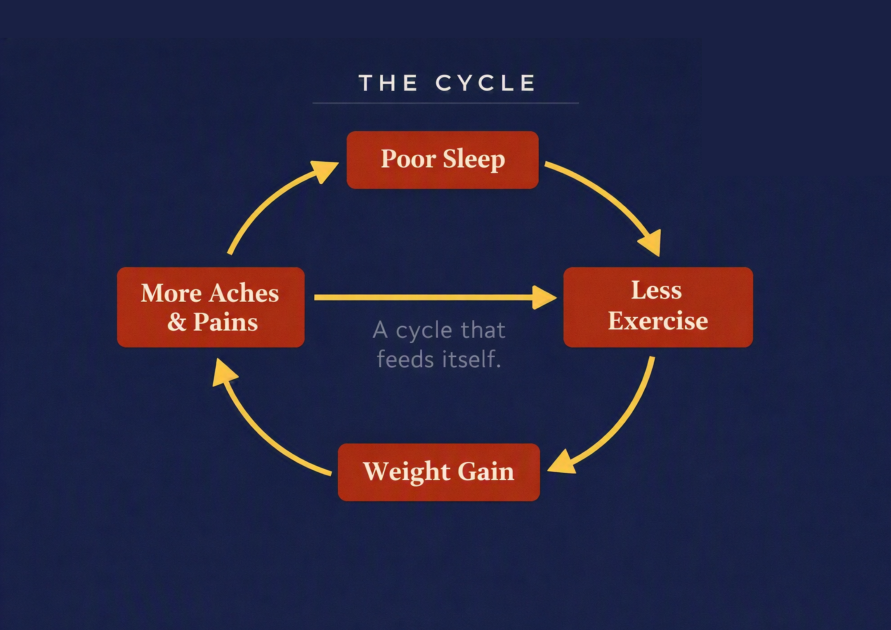
I noticed a negative feedback cycle taking hold.
- Poor sleep was making it hard for me to get up and exercise properly first thing in the mornings before the tropical heat made it uncomfortable.
- Less exercise meant my weight was creeping up again despite a focus on good eating habits and nutrition.
- More weight meant more strain on joints and more aches and pains
- And more aches and pains made sleep harder.
Around it all went, feeding itself.
I’d also been spending long stretches at a desk working on various projects, and the stiffness that came with that had become a regular feature of my days. Good ergonomic chairs are rare when you’re traveling, so you do the best with what you have at the time.
It got to the stage where I was barely able to stand up properly after a long session. Aching lower back, hips, knees, the works.
But I wasn’t interested in everything the ads were promising. I wanted to know whether grounding products could genuinely help with the two things that were affecting my quality of life right then:
- Sleep — the logical place to try to break the cycle. Fix the sleep, and the rest had a better chance of following.
- Aches and pains — a genuine secondary hope, given what the research suggested about grounding and inflammation.
I have a scientific background, which means I’m generally the last person to get excited about a wellness product from a Facebook ad.
But as I’m sure many of you have experienced, once you start looking for solutions to something online, the ads find you. I was researching sleep and inflammation solutions, and the ads, including those from companies selling grounding products, started finding me. They were making claims about all of my issues and more — sleep, inflammation, aches, recovery, skin, energy. The list was long.
So when GroundingWell came along, I didn’t dismiss it. But I also didn’t buy in blindly.
A Quick Note on the Science
There is actual research on grounding. It’s not a lot, and not conclusive, but enough that I couldn’t write it off as pure wellness nonsense. A handful of studies have looked at whether regular grounding affects sleep quality and pain levels, and some found promising results. The studies are small, and the field is still young. But “preliminary evidence exists” is a very different starting point from “no evidence at all.” What I read was enough to make me genuinely curious rather than dismissive.
How This ‘Experiment’ Came About
I’d been seeing GroundingWell ads for a while and had become curious enough to investigate further and give them a try.
As with any of the tools, services and products we use, I always check to see if there’s a partnership program of some kind — and GroundingWell did have one. Because if something truly earns its place in our travel toolkit, I’m happy to recommend it while earning a commission to support our lifestyle.
I applied to their affiliate program, which led to a conversation. The outcome was an offer: the products to try free of charge, a fee to make 30 videos documenting my experience, a unique discount code for my followers, and commission on any sales. My one condition was that everything I published would be honest, regardless of what I found.
I wasn’t prepared to make 30 videos about something I hadn’t tested thoroughly, so I designed a structured personal experiment and let the results determine whether I’d recommend the products at all.
In my case, the results were encouraging enough to keep using them:
- The grounding sheet (which I called the travel sheet throughout the video series, because that’s how I think of it) and the mat have earned a place in my pack — I’ll continue using them as I travel
- The fitted sheet weighs slightly more, so that’s headed to my non-traveling sister who also has sleep issues. If it works for her too, I’ll buy one for my mum.
That’s why you’ll find the links and discount codes here. I’m now actively promoting them as an affiliate, so if you buy through my links, I earn a small commission at no extra cost to you.
You can read our full disclosure policy [HERE]
What I Actually Did
I designed a structured personal experiment rather than just trying the products and reporting how I ‘felt.’
It went for 31 nights across four locations, with a sleep tracker running every night and daily measurements throughout.
I built a baseline period before introducing the products so I’d have something real to compare against, and I tracked as consistently as I could across changing environments.
Here’s how it actually worked:
Turn mobile devices to the horizontal position to view the table better.
| Period | Location | Products used | Nights | Role |
| Baseline | Vietnam Airbnb + Brisbane housesit | None | 13 | Establish Baseline |
| Trial | Same Brisbane housesit | Sheets + mat | 12 | Intervention begins |
| Excluded | Location 2 – Brisbane friend’s place | None — unplanned | 1 | Excluded from calculations |
| Trial | Location 3 – Adelaide – with family | Sheet + mat | 1 | Intervention continues |
| Trial | Location 4 – Adelaide housesit | Sheet + mat | 17 | Intervention continues |
One night during the trial, I didn’t use the products. I excluded that night from the intervention calculations as it wouldn’t be fair to include a night when the products weren’t in use. But my sleep was noticeably poor compared to the nights when I did use them. I found that worth noting, but I’m not drawing firm conclusions from one night either way. I devoted a whole video to why you should never rely on a single data point [LINK TO VIDEO] — so I’m flagging this as an observation, not as evidence.
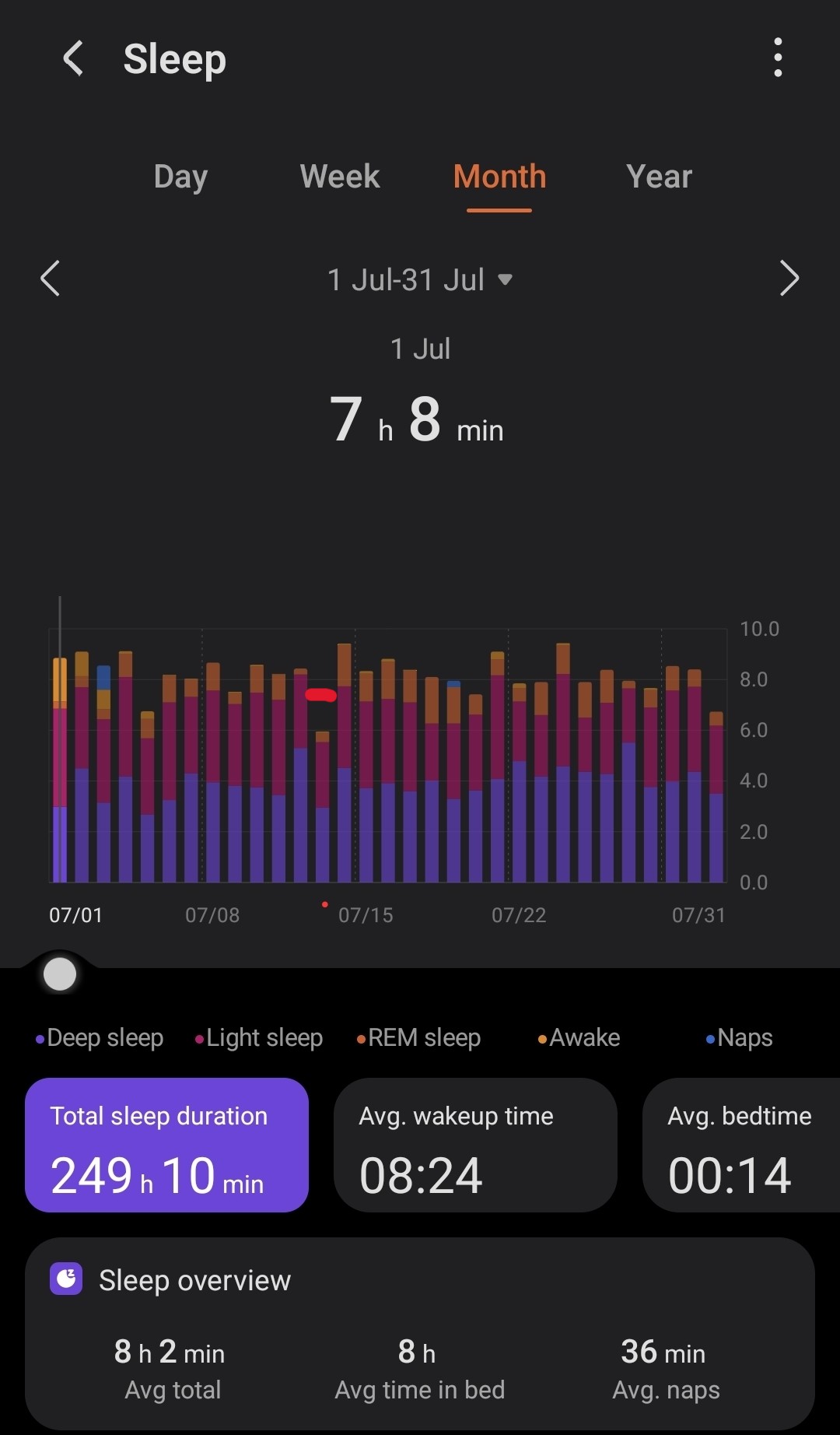
Trial Period. Night 13 – no grounding products used.
Throughout both the baseline and the trial, I tried to apply science-backed sleep habits as consistently as I could. I’ve found ten that are practical enough to use anywhere, regardless of where you’re sleeping. It’s not always possible to nail all of them every night on the road, but I aimed for as many as I could manage across both periods. If you’d like the full list I use, it’s in my free Sleep Better Anywhere guide.
Get the free Sleep Better Anywhere guide → [LINK]
I’d originally planned the trial for two weeks. GroundingWell’s own guidance recommends trying the products for at least 30 days, and longer for chronic conditions. So when the initial results showed improvements, I was genuinely intrigued and decided to extend the experiment for the full month, rather than stop. I’m glad I did.
What This Experiment Can and Can’t Tell You
Before I give you the numbers again, it’s worth being clear about what kind of evidence this is.
What it can tell you:
- What happened to my sleep during the trial period
- How consistently the pattern appeared across different locations and beds
- What my consumer wearable recorded relative to my own baseline
- What I experienced personally in terms of sleep quality and aches and pains
- How practical the products were for someone traveling with carry-on/compact luggage
What it can’t tell you:
- Whether grounding caused the improvement, something else did, or it was a combination of factors
- Whether the improvement was partly due to the placebo effect
- Whether the same thing would happen to you
- Whether the products would help with a specific medical condition
- Whether the results will persist indefinitely
- What a controlled clinical trial would show
I’m one person, in real-world conditions, with a consumer sleep tracker. That’s the honest scope of this.
What the Data Showed
These are my results from the intervention period, compared against my 13-night pre-trial baseline.
- Sleep quality score: baseline 76, up to 90 by the final period
- Total sleep: from under 7 hours a night to consistently over 8
- Deep sleep: 63% more minutes per night than my pre-trial baseline — the combined effect of sleeping longer overall and spending a higher percentage of that time in deep sleep
- Note on the deep sleep figure: this is relative improvement against my own baseline, measured consistently with the same device. I’m not claiming clinical precision — consumer wearables can’t deliver that.
- Wake-ups: from an average of 2 a night down to essentially zero — just one wake-up across the entire final 9 nights
- Aches and pains: decreased throughout. I stopped trying to track this precisely after the first two weeks because the changes felt too incremental and subjective to measure reliably. But the difference was noticeable, and it’s still noticeable now.
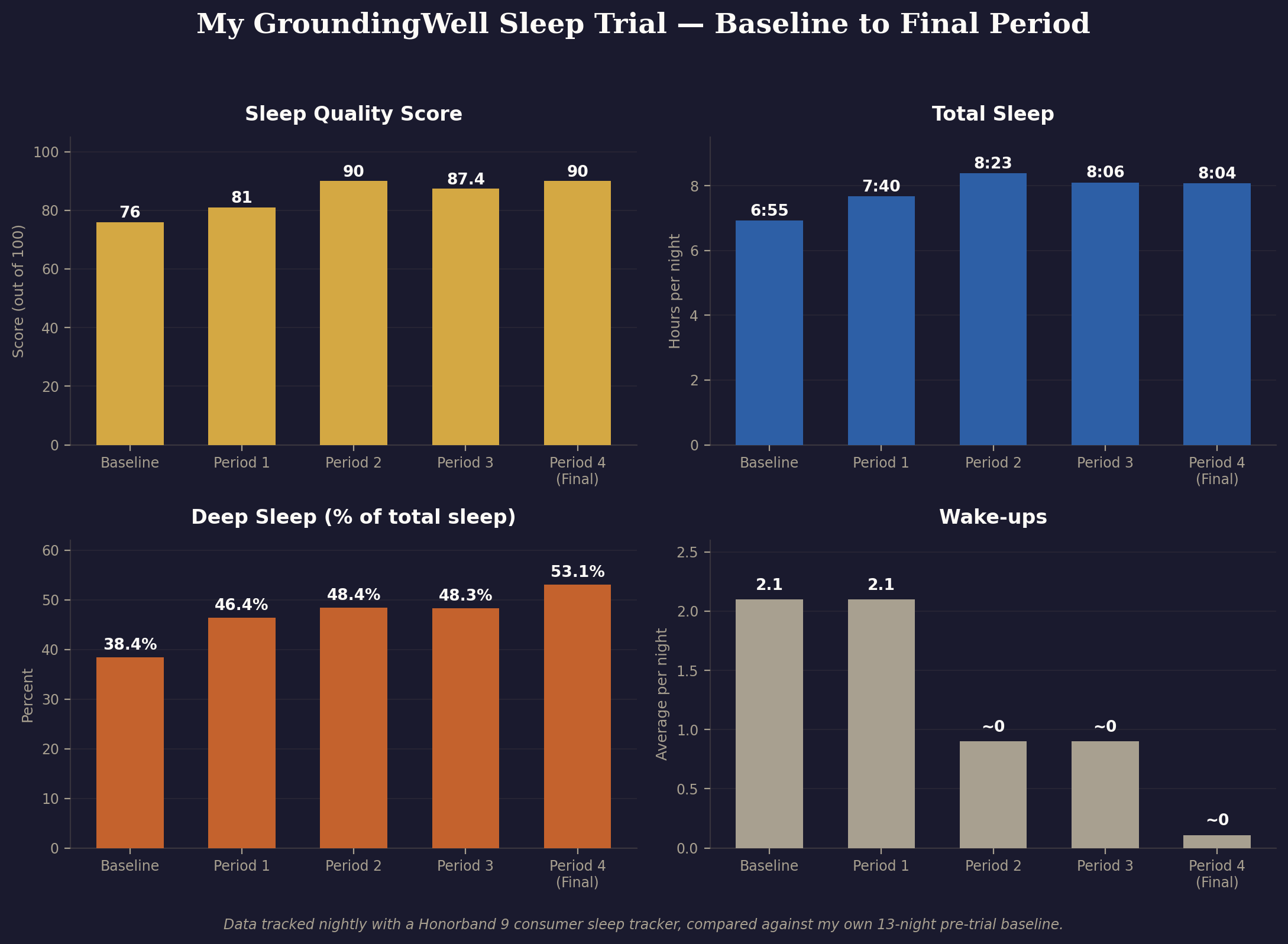
My tracked data and how I felt in the mornings moved in the same direction throughout, and that’s what really matters to me.
What I Still Don’t Know
I can’t tell you with certainty that grounding was the sole reason for these changes.
My sleep data improved across three different locations and beds. That makes the pattern interesting, but it doesn’t eliminate the many other variables that changed at the same time. I made a genuine effort to mitigate these with my 10 sleep habits, but I can’t rule them out entirely:
- Different environments, temperatures and noise levels at each location
- Changing routines across a 30-night period
- Natural variation in sleep quality over time
- The placebo effect of trying something new
- Changes in stress, workload or physical activity
But it’s also worth saying: variation is simply my life. Different beds, different environments, different locations — that’s not a flaw in this experiment; it’s the reality I was testing for. I wasn’t looking for something that works in a sleep lab. I was looking for something that works anywhere, the same way my sleep habits do. The fact that the pattern held across three different locations means something to me.
Real-world conditions are messy. I’m not pretending otherwise.
I don’t know whether the reduction in aches and pains was directly related to grounding, better sleep, or something else entirely.
What would change my mind?
If the results reversed as I continue using the products over the coming months, I’d want to understand why.
I’ll keep monitoring as we move through Europe over the next few months, and I’ll report back when there’s something worth reporting.
One Thing You Need to Know
For GroundingWell products to provide the electrical connection they’re designed for, the outlet needs to be properly earthed. Whether this is straightforward depends on the electrical system and accommodation you’re using — it’s worth checking before you buy them and pack to go traveling, rather than discover they won’t work on arrival.
Look up what you’re likely to find at your destination here →
My Verdict
Would I personally choose to keep using GroundingWell products?
Yes.
My results were encouraging enough that I’ve kept both the grounding sheet and the mat in my pack. Both together weigh under 400 grams, and given what I found, the decision to carry them is an easy one.
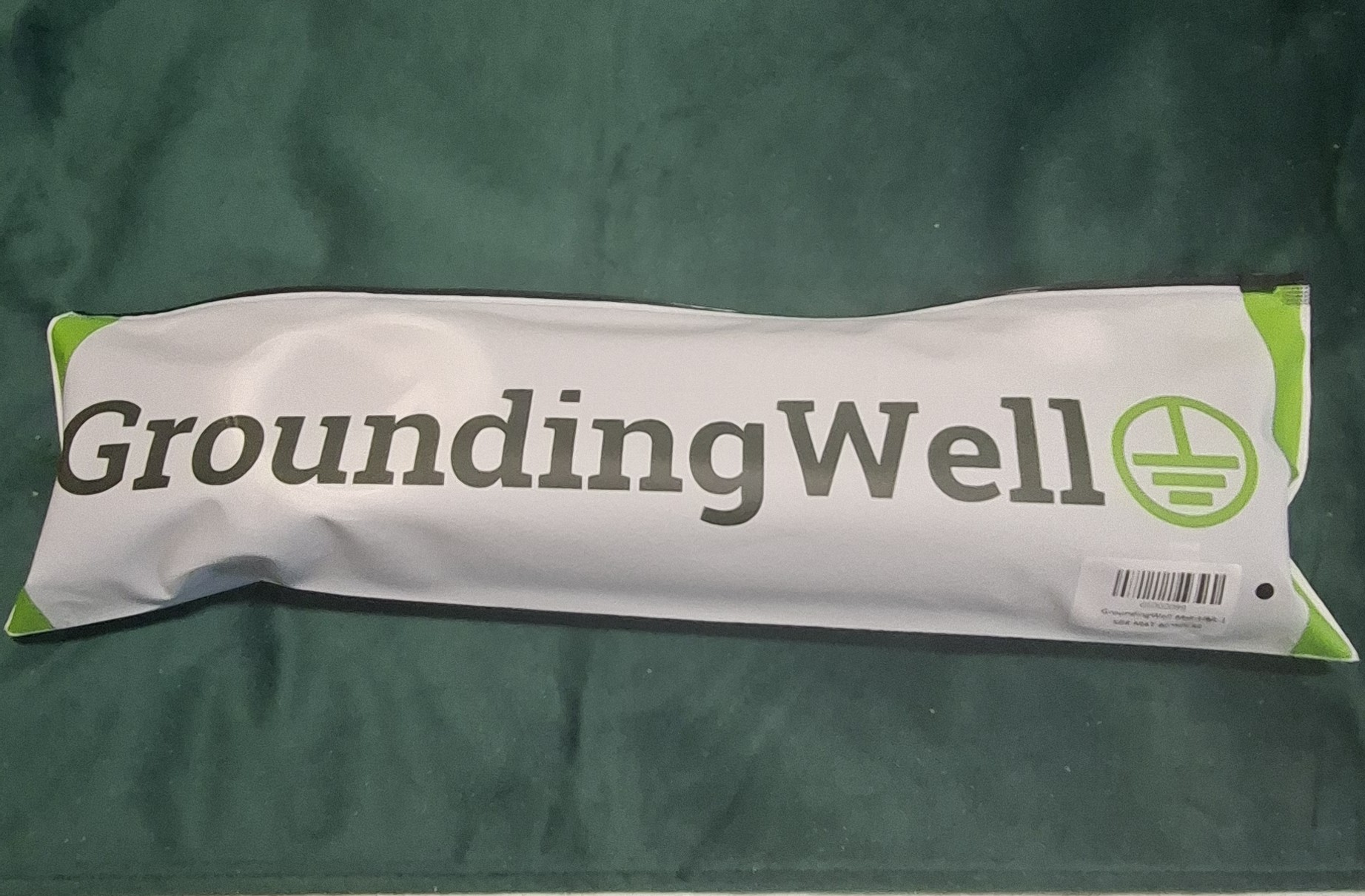
Whether they’re worth trying for you is a different question. My experiment can’t answer that.
What I can say is that if poor sleep or aches and pains are taking the shine off your travels, the 90-day guarantee means you can investigate that for yourself.
The guarantee terms, as I verified directly with GroundingWell in writing:
- 90 days to try the products
- Return them if you’re not satisfied after a genuine trial
- Products must be in good condition, and original packaging is preferred but not mandatory.
- You pay the return postage – they have return locations in the US, Australia and Canada.
On which product to choose:
- Staying in one spot? The fitted sheet is the more convenient option. I also use the mat for day use: working at a computer, watching TV, or as a floor mat when meditating.
- Moving between beds regularly? Swap in the grounding sheet (GroundingWell’s name for what I’ve been calling the travel sheet) for the fitted sheet and use with the mat as above as a more compact option. Both together come in under 400 grams.
If You Decide to Try Them
- Check your outlet first — confirm it’s properly earthed before you buy
- Use the discount code — 10% off at groundingwell.com/GWCOTB, or use discount code GWCOTB at checkout. It stacks on top of any sale price at the time, so if there’s a promotion running, you get both.
- Give it a genuine 30-day trial — If you want to replicate my approach, give it a genuine 30-day trial rather than judging it after a night or two.
- Keep your usual sleep habits going — don’t change everything else at once if you’re trying to work out whether something is making a difference
- Keep the products in good condition — this matters for the guarantee. Also keep the original packaging if possible.
- Track your results — you need a real before and after to know what’s actually changed
- Check the guarantee terms — if you decide the products aren’t for you, check the current terms before returning them
And if you’d like the tracking spreadsheet I used throughout the experiment, feel free to reach out. I’m happy to share it for free.
Want to Go Deeper?
The full 30-video series covers everything, from the science behind grounding to the product setup, the weekly data, the bad nights, and the final verdict.
Watch the full series on Facebook → [LINK]
Jump straight to the verdict — Video 30 → [LINK]
And if sleep while traveling is something you’re genuinely trying to improve, I put together a free guide with ten practical sleep strategies backed by evidence, plus a bonus section on what I found during this experiment.
Get the free Sleep Well Anywhere guide → [LINK]

Questions People Ask About GroundingWell Products
Do GroundingWell products work?
I can only tell you what happened in my own structured personal experiment. My sleep quality, total sleep and deep sleep all improved consistently across the intervention period compared to my pre-trial baseline, and I noticed a reduction in aches and pains. My tracked data and how I felt moved in the same direction throughout. What I can’t tell you is whether that will be your experience.
How long does it take for GroundingWell products to work?
GroundingWell’s own guidance recommends at least 30 days, and longer for chronic conditions. I originally planned two weeks but extended my own experiment to 30 days. My strongest results appeared in the final period, which is one reason I’m glad I continued.
Can you use GroundingWell products while traveling?
Yes, with one important caveat. The outlet needs to be properly earthed for the products to work as designed. I haven’t had issues across the locations I’ve tested in, but it’s worth checking your specific destination before you pack them. Check what you’re likely to find at your destination here →
What is the difference between the GroundingWell fitted sheet and the grounding sheet?
The fitted sheet is a full-size fitted sheet with conductive threads woven through — it covers the whole bed. The Grounding sheet is made of the same materials but much shorter and drapes across the bedding, rather than cover the whole surface. For fixed-base travelers, the fitted sheet is the more convenient option. The mat works well alongside it for day use too, whether you’re working at a computer, watching TV, or using it as a floor mat when meditating. For those moving between beds regularly, with limited luggage space, the grounding sheet and mat are the practical option.
Does GroundingWell have a money-back guarantee?
Yes. GroundingWell offer a 90-day guarantee, and I verified the full terms directly with them in writing. If you’re not satisfied after a genuine trial period, you can return the products provided they’re in good condition. The original packaging is preferred but not mandatory. You pay the return postage, and they have return locations in the US, Australia and Canada. I’d recommend giving the products the full 30 days before making any decision about returning them.
Is the GroundingWell discount code GWCOTB still valid?
The code GWCOTB gives 10% off at groundingwell.com/GWCOTB and stacks on top of any sale price at the time. It was active and verified when this post was published, but I can’t guarantee it will remain active indefinitely. Click through to confirm before purchasing.
About the Author
Sharyn Nilsen has degrees in chemistry and microbiology and spent years in professional laboratory quality management before becoming a full-time traveler, with her husband Tim, in 2010. She isn’t a health professional — she brings a scientific and quality-assurance mindset to investigating wellness claims and testing them in real-world travel conditions.
Here’s that discount link and code again:
10% off at https://groundingwell.com/GWCOTB,
or use discount code GWCOTB at the checkout.
Disclosure: Note that some of the links and advertisements on this page lead to products from our partners, including Amazon. If you buy something after using those links, we may earn a small commission from the sale. However, you have our assurance that you won’t pay any more than you would by buying directly from their site. And we promise to only link to products or companies we’ve used personally, been recommended by trusted family, friends, or travel buddies, or researched thoroughly before adding them to the list. You may also see other links served to you by Google. These will display products that Google thinks you want to see. If you click on those advertisements, we also get paid a small (minuscule) amount. If you want to know more about how you help to fund our travels without costing you a cent – then HEAD OVER HERE for a more comprehensive explanation.